Equitable Oppurtunities In Sports and Extra Curricular Activities
Education Beyond the Desk
The education of a child is often erroneously confined to the four walls of a classroom. However, the foundational skills for life—resilience, teamwork, emotional regulation, and social navigation—are predominantly forged on the playground, the stage, and the activity club. For a Child with Special Needs (CWSN), these “after-school” hours are not secondary; they are the primary site for social and physical breakthroughs.
In a traditional classroom, a child works on handwriting and academic compliance. On a sports team, that same child learns to support a peer, handle the frustration of a loss, and earn the respect of the community. These are the “hidden curriculum” skills that lead to a dignified, independent adult life.
8.1 The Policy Landscape: NEP 2020 and Legal Mandates
The National Education Policy (NEP) 2020 envisions a well-rounded education where sports and arts are not “extra” but integral. It demands a shift in perception: physical education is not a “non-educational” luxury but an essential component of human development.
‘The curriculum must include basic arts, crafts, humanities, games, sports and fitness, languages, literature, culture, and values, in addition to science and mathematics, to develop all aspects of learners’ brains and make education more well-rounded, useful, and fulfilling to the learner.’ (Section 0.3)
The RPWD Act 2016 emphasizes that “reasonable accommodation” is not a favour but a legal right. Schools are mandated to provide the same access to the playground as they do to the classroom.
8.2 The Multi-Dimensional Benefits of Inclusive Sports and Activities
Physical activity is important for children with special needs (CSWN) as it is for any child. Sports and other Extra-curricular activities should form an important part of the school curriculum for all children. One of the most significant advantages of inclusive extracurricular activities is the promotion of social inclusion. Inclusive sports and activities create an environment where all students, regardless of their abilities, can participate together, leading to a sense of belonging and acceptance and breaking down barriers and stereotypes.
Research consistently shows that inclusive physical activity triggers a ripple effect of growth across five domains:
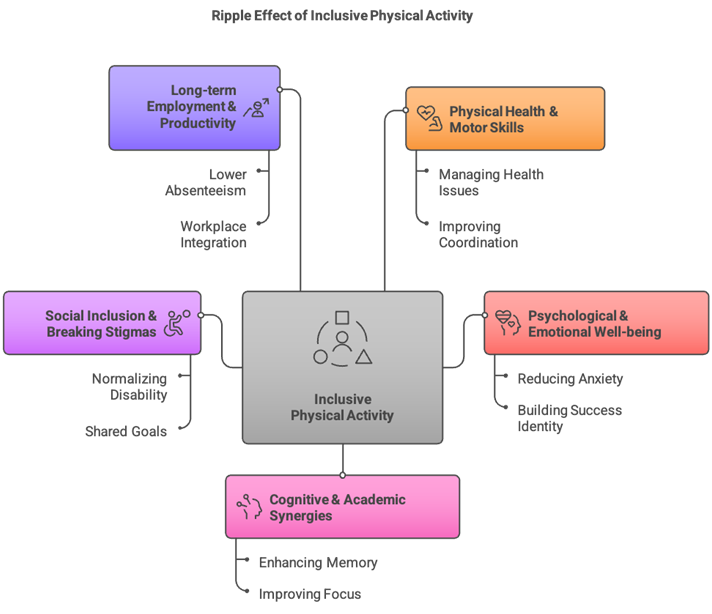
- Physical Health & Motor Skills: Regular exercise is critical for managing secondary health issues often associated with certain disabilities, such as obesity, cardiovascular weakness, or low muscle tone. Activities like swimming or adapted athletics improve proprioception and gross motor coordination.
- Psychological & Emotional Well-being: Participation acts as a powerful antidote to the anxiety and depression that social isolation can cause. Success in a non-academic field builds a “success identity” that carries over into the classroom.
- Cognitive & Academic Synergies: Physical movement stimulates brain-derived neurotrophic factor (BDNF), which enhances memory and focus. For neurodivergent children, structured physical activity (like Yoga or Martial Arts) provides the sensory regulation needed to focus on academic tasks later in the day.
- Social Inclusion & Breaking Stigmas: Inclusive sports are the most effective way to “normalize” disability for typical children. When a typical child plays on a team with a peer in a wheelchair, the disability becomes a secondary detail to the shared goal of the game.
- Long-term Employment & Productivity: Statistics show that CWSN who participate in organized sports have lower rates of absenteeism in future employment and higher rates of workplace integration due to their developed interpersonal skills.
8.3 Strategic Implementation: The “How-To” for Schools
To move from vision to reality, School Heads must lead through administrative action:
8.3.1. Adapted Physical Education (APE):
Availability of qualified Physical Education teachers & Sports coaches in the school is a must. In an inclusive set up these teachers & coaches may have to combine general physical education methodology with adapted methods in order to cater to diverse needs.
- A qualified physical education teacher is as important as any subject teacher in the school. Reducing student-to-teacher ratios during inclusive sports sessions ensures safety and meaningful engagement.
- The PE teachers may have to handle children with different disabilities. They need to be aware about disabilities and ways to train children with special needs. A general PE teacher may feel overwhelmed by a child with a complex disability.
- Schools must invest in “Adapted Physical Education” training (APE).
- The schools can organize special training programs in adapted physical education, for the general physical education staff in school. A cluster of schools in an area could collaborate to arrange such training sessions for all their PE & Sports teachers.
- Schools may even collaborate with local / non-governmental sports facilities in the locality to plan and execute the Inclusive physical education program for the school.
- APE trained PE teachers can conduct sports activities for parents and siblings of CWSN in school once a month. When the family members learn to play together, they can enjoy games at home too!
“Adaptive Physical Education” Training Facilities in India
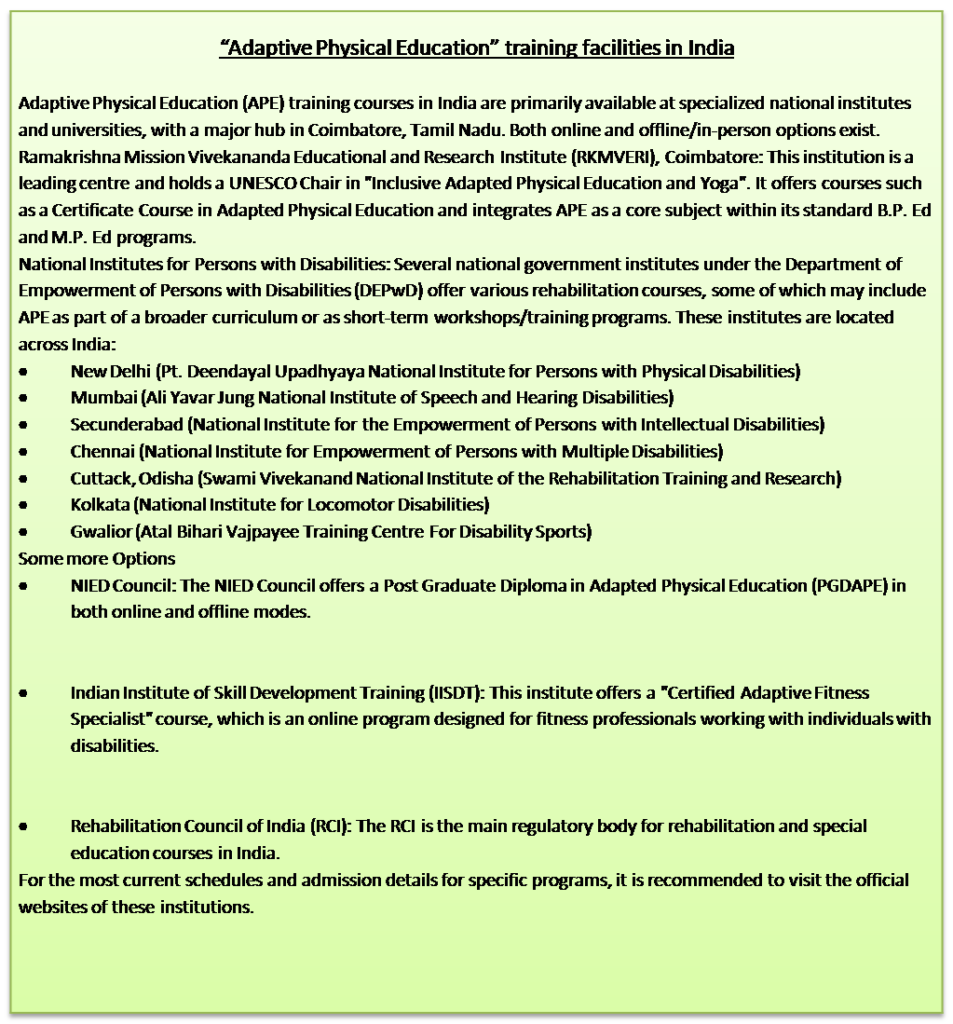
Adaptive Physical Education (APE) training course in india are primarly available at specialized national institutes and universities, with a major hub in Coimbatore, Tamil Nadu. Both online and offline/in-person options exist.
Ramakrishna Mission Vivekananda Educational and Research Institute (RKMVERI), Coimbatore: This institute is a leading centre and holds a UNESCO Chair in “Inclusive Adapted Physical Education and Yoga”. It offers courses such as a Certificate Course in Adapted Physical Education and integrates APE as a core subject within its standard B.P. Ed and M.P. Ed programs.
National Institutes for Persons with Disabilities: Several national government institutes under the Department of Empowerment of Persons with Disabilities (DEPwD) offer various rehabilitation courses, some of which may include APE as part of a broader curriculum or as short-term workshops/training programs. These institutes are located across India:
- New Delhi (Pt. Deendayal Upadhyaya National Institute for Persons with Physical Disabilities)
- Mumbai (Ali Yavar Jung National Institute of Speech and Hearing Disabilities)
- Secunderabad (National Institute for the Empowerment of Persons with Intellectual Disabilities)
- Chennai (National Institute for Empowerment of Persons with Multiple Disabilities)
- Cuttack, Odisha (Swami Vivekanand National Institute of the Rehabilitation Training and Research)
- Kolkata (National Institute for Locomotor Disabilities)
- Gwalior (Atal Bihari Vajpayee Training Centre For Disability Sports)
Some more Options
- NIED Council: The NIED Council offers a Post Graduate Diploma in Adapted Physical Education (PGDAPE) in both online and offline modes.
- Indian Institute of Skill Development Training (IISDT): This institute offers a “Certified Adaptive Fitness Specialist” course, which is an online program designed for fitness professionals working with individuals with disabilities.
- Rehabilitation Council of India (RCI): The RCI is the main regulatory body for rehabilitation and special education courses in India.
For the most current schedules and admission details for specific programs, it is recommended to visit the official websites of these institutions.
8.3.2. Collaborative IEPs: A Multi-Disciplinary Approach in schools:
The Individualized Education Program (IEP) should not be restricted to reading and mathematics alone.
- The PE Component: It would be ideal if the PE teacher could attend IEP meetings. Goals might include things like : “Child will participate in a 10-minute relay race with the assistance of a peer buddy.”
- Therapeutic Alignment: Occupational therapists can suggest specific movements that the sports coach can then integrate into warm-up routines.
- Collaborative Effort: The special education teachers, physical education teachers and the therapists should work closely together and track the child’s progress post implementation of any physical training.
- It is not only about competition: It is necessary to distinguish competitive sport from fitness programmes, remedial physical activities and active recreation.
- In this Collaborative effort, an APE trained PE teacher can make a huge difference.
8.3.3. Practical ways to adapt or modify games in schools:
To ensure inclusive participation of Children with Special Needs (CWSN), these strategies focus on ability-based participation rather than disability-based limitations.
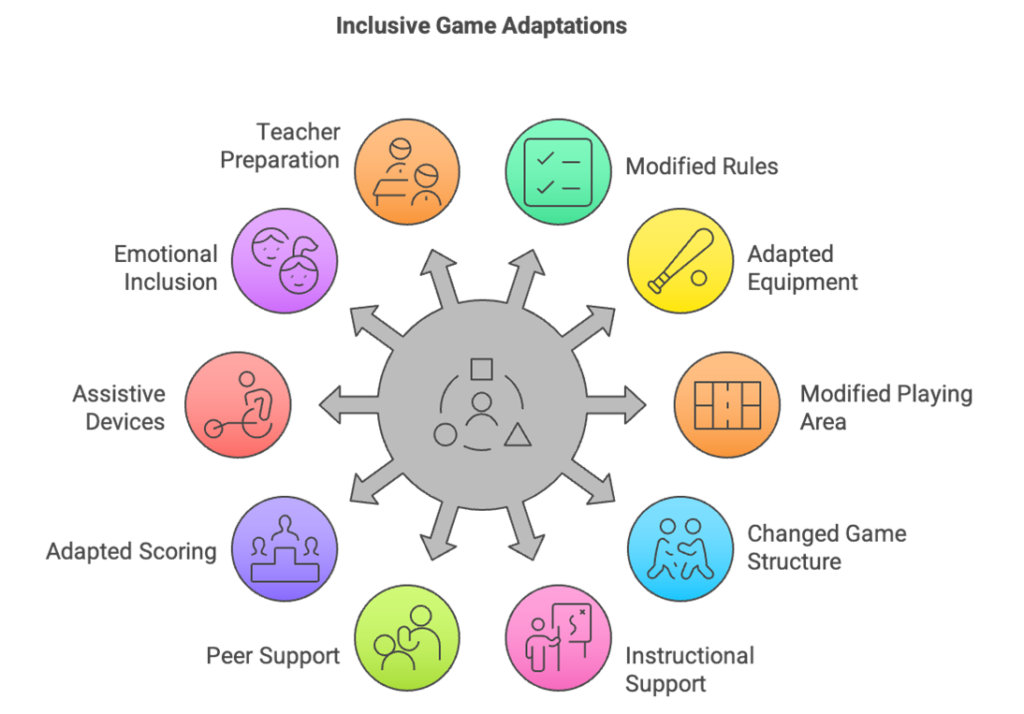
1. Modify Rules and Objectives
- Simplify rules and reduce the number of steps involved
- Allow extra time or multiple attempts
- Change winning criteria (e.g., participation, effort, teamwork instead of score)
- Permit rule flexibility based on individual needs
2. Adapt Equipment
- Use larger, lighter, or softer balls
- Provide bats/rackets with bigger grips
- Use brightly colored or audible balls for visually impaired students
- Use cones, hoops, or tactile markers for boundaries
3. Modify Playing Area
- Reduce the size of the playing field
- Clearly mark boundaries using color, texture, or sound
- Ensure surfaces are smooth and obstacle-free
- Create safe zones or rest zones
4. Change Game Structure
- Play in smaller groups or pairs
- Reduce game duration with more breaks
- Rotate roles so every child participates
- Allow seated or stationary play when required
5. Provide Instructional Support
- Use simple language, visual cues, demonstrations, or gestures
- Break skills into smaller steps
- Give clear and consistent instructions
- Repeat demonstrations when needed
6. Peer Support and Cooperative Play
- Pair CWSN with trained buddies or peer helpers
- Promote team-based goals instead of competition
- Encourage cooperative games rather than elimination games
7. Adapt Scoring and Feedbac
- Focus on personal improvement rather than comparison
- Reward effort, participation, and teamwork
- Provide positive reinforcement and encouragement
8. Assistive Devices and Supports
- Use walkers, wheelchairs, or adaptive sports equipment as needed
- Allow assistive communication tools
- Provide auditory cues or tactile guidance
9. Emotional and Social Inclusion
- Create a supportive, non-judgmental environment
- Encourage classmates to appreciate differences
- Avoid games that exclude players after mistakes
10. Teacher Preparation and Planning
- Plan inclusive activities in advance
- Consult special educators or therapists
- Observe and modify activities continuously based on student response
8.3.4. Some Examples of Adapted Games
1.Inclusive Cricket
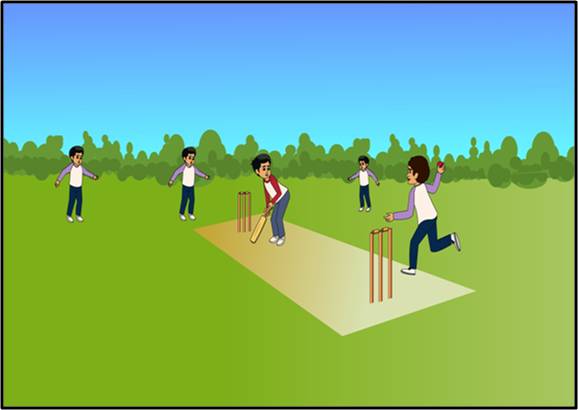
In a standard school cricket match, a student with visual impairment can participate using a “Bell-Ball” (a ball that rattles when it moves). The rules are modified so that the ball must be bowled underarm and bounce twice before reaching the batter. This simple change allows the entire class to play together without excluding anyone.
2. Modified Football
Modified football rules for Children with Special Needs (CWSN) are adapted based on the specific type of disability and the players’ abilities to ensure inclusion, safety, and fairness. Therefore, there are various kinds of modified football games.
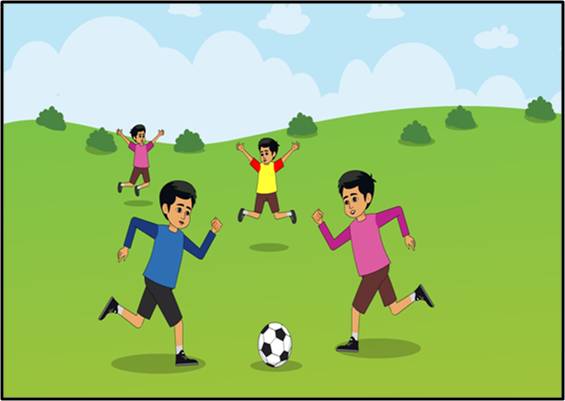
Modified football rules for Children with Special Needs (CWSN) are adapted based on the specific type of disability and the players’ abilities to ensure inclusion, safety, and fairness. Therefore, there are various kinds of modified football games.
General Adaptations involve modifying several aspects of the game:
- Pace: Slowing the overall pace of the game.
- Equipment: Using larger, softer, or bell balls (for visually impaired players).
- Environment: Clearly defining boundaries, using smaller pitches/fields, and potentially lowering or enlarging goals.
- Support: Allowing peer assistance or one-on-one guidance from coaches/teachers/therapists.
- Rules: Reducing the number of players per team and eliminating complex rules like offside.
- Rest: Providing rest periods as needed for endurance or fatigue management.
3. Basketball (Team Sport)
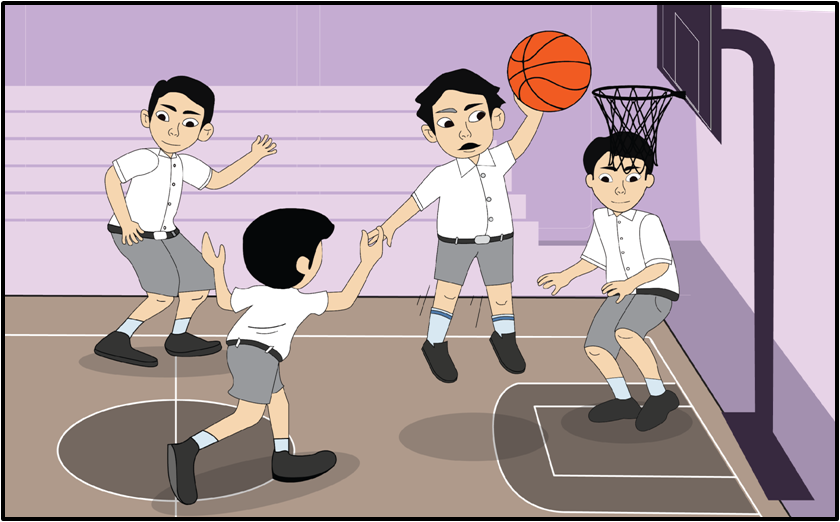
Adaptations:
- Use a lower basket/hoop
- Use a lighter or larger ball
- Allow two-handed throws and underarm throws
- Reduce the number of players (3 vs 3)
- Allow extra steps or dribbling exemptions
- Wheelchair users can push the ball instead of dribbling
- Use a beeper ball or verbal cues for visually impaired students
4. Athletics (Running, Jumping, Throwing Events)
A. Running Events:
Adaptations:
- Shorten the distance (e.g., 50 m instead of 100 m)
- Allow walking or assisted running
- Use guide runners for visually impaired students
- Start races using flags or hand signals instead of whistles
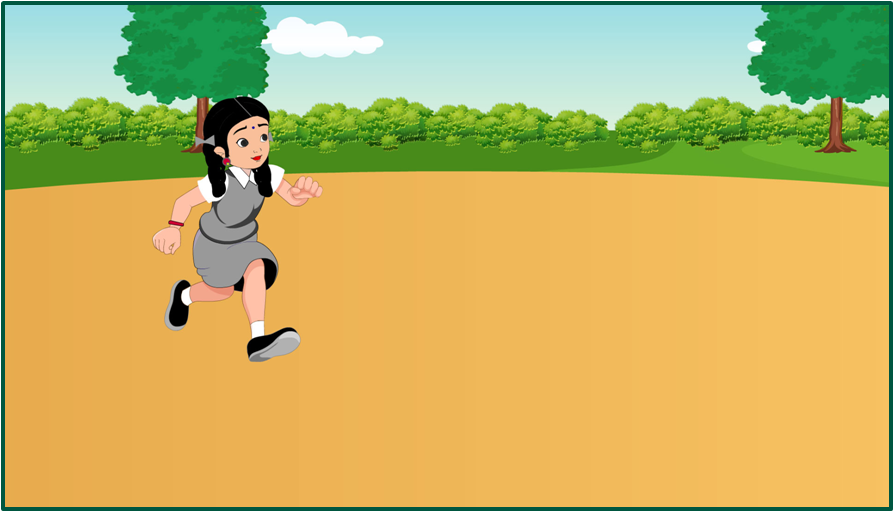
B. Jumping Events:
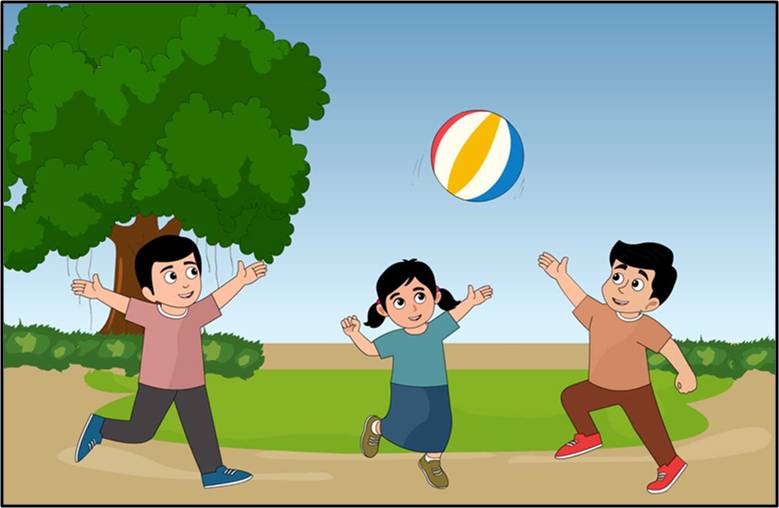
Adaptations:
- Replace long jump with standing broad jump
- Allow jumping from a mat instead of sand pit.
- Reduce take-off distance
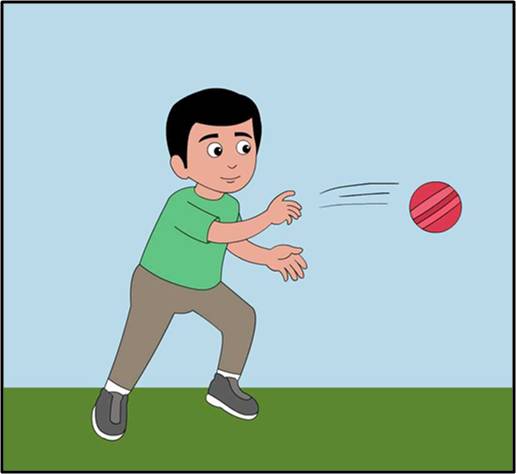
C. Throwing Events
Adaptations:
- Use soft balls or bean bags
- Reduce throwing distance
- Allow seated throws
5. Throwball
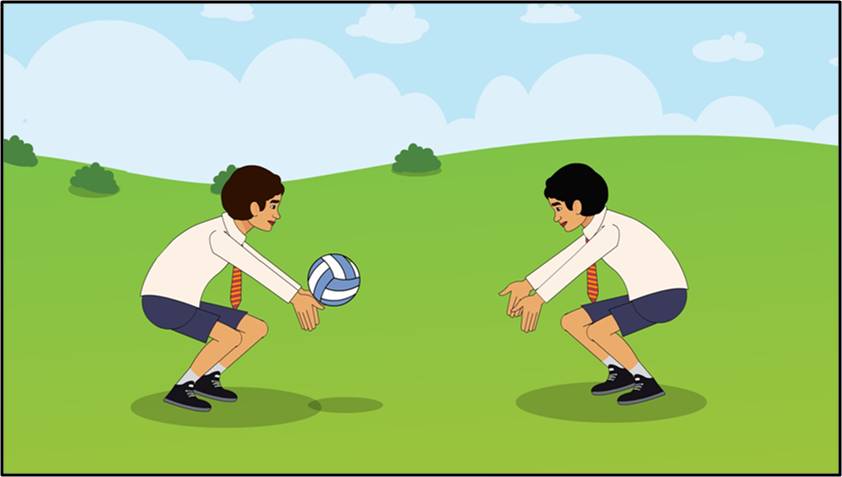
Adaptations:
- Lower the net height
- Use a soft or lightweight ball
- Allow catch and throw after bounce
- Permit holding the ball for a few seconds
- Reduce court size
- Allow underarm throws
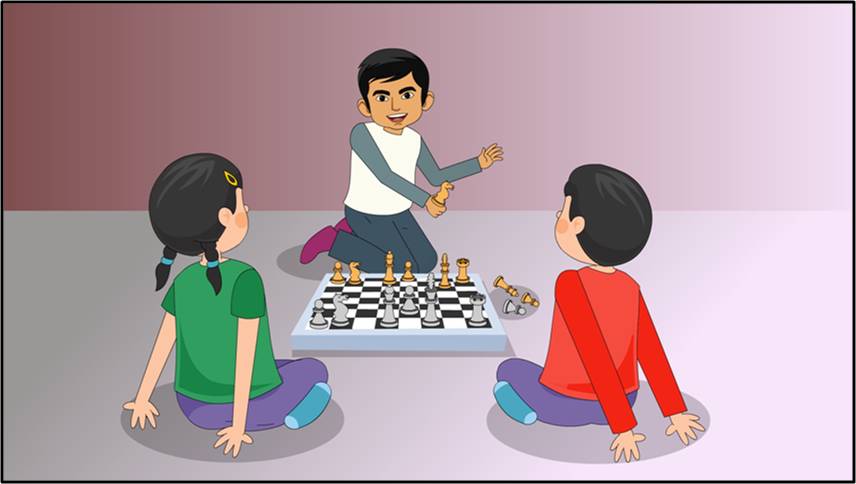
6. Chess (Board Game)
Adaptations:
- Use large-size chess boards and pieces
- Use tactile or Braille chess boards
- Allow extra time for moves
- Pair with a peer helper
- Simplify the game (fewer pieces)
7. Carom (Indoor Board Game)
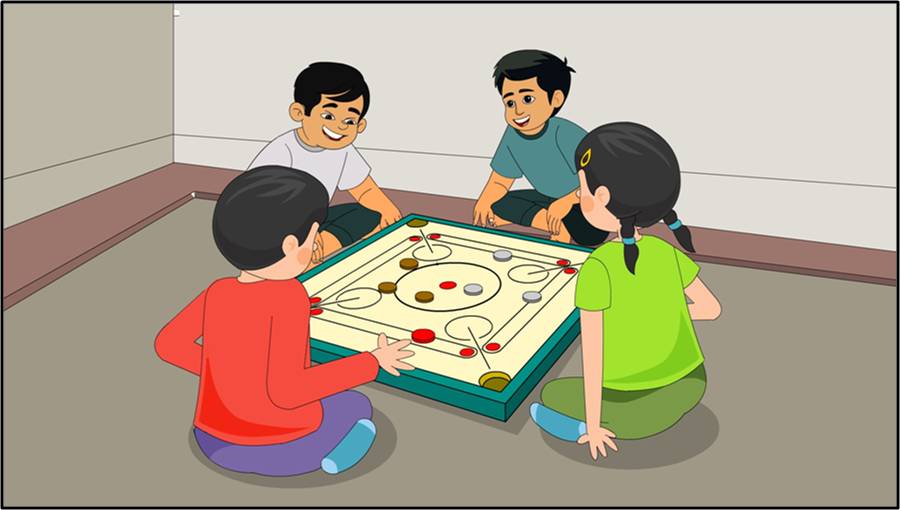
Adaptations:
- Use a larger carom board
- Allow closer positioning to the board
- Use a lighter striker
- Allow push shots instead of flicking
- Provide physical support or seating adaptations
- Allow verbal assistance for direction
8. Some examples of other adapted games for schools
- Balloon Polo: Use pool noodles to hit balloons into a goal, great for wheelchairs or different mobility levels.
- Castle Bowling: Build a “castle” from boxes and knock it down with a ball; add bells in the boxes for auditory cues.
- Agility Courses/Obstacle Courses: Adapt with different stations, like crawling under a sheet or navigating a path, using sensory cues or guides.
- Tunnel Tag/Snake in the Gutter: Kids form a tunnel and others crawl through or under, promoting teamwork and movement.
- Body Spellers: Students use their bodies to form letters or shapes.
- Statues/Freeze Dance: Dance to music and freeze when it stops; can be adapted with different poses or rules.
- Team Relays: Teams of 4 are formed by pairing neurotypical and neurodivergent children. Innovative relays can be planned. With music and cheering from class-mates, such relay games can be very exciting for children They are not always for competing.
8.3.5 Pathways to Excellence: Professional Sporting
Inclusion is the first step toward professional representation.
- Educational institutions should encourage Students with disabilities to utilize the sports opportunities given by the government and private organizations.
- Schemes from the Ministry of Sports have been introduced to broad-base participative sports among the people with disability. This includes Grants for Training of community Coaches and Grants for holding sports competitions at District, State and National level competitions for CWSN. Nodal agencies like Special Olympics Bharat have been designated with this task.
- If schools can provide updated information and guide parents to enrol their children for such professional training programmes, it will be immensely helpful.
Above all, the School Management should provide the necessary encouragement, support and amenities to the physical education team. This will keep the team encouraged to come up with innovative ways of teaching and training. Schools should also act as scouts for:
Special Olympics Bharat: For children with intellectual disabilities.
Paralympic Committee of India: For those with physical and visual impairments.
Deaflympics: For students with hearing loss.
By highlighting these pathways, schools show parents that their child’s talent has a global stage.
8.4. Extra-Curricular Activities- Pathways to Inclusion
In parallel with inclusive sports, schools must create opportunities for Children with Special Needs (CWSN) to identify, develop, and demonstrate competencies in music, visual arts, and communication-based activities.
Engagement in vocal and instrumental music contributes to language development, auditory processing, and emotional regulation, while participation in arts and crafts enhances fine motor coordination, sensory integration, and task persistence.
Structured platforms for public speaking, drama, and creative writing—supported through visual scaffolds, assistive technology, alternative communication systems, or collaborative formats—enable CWSN to build self-confidence, self-expression, and self-advocacy skills.
These Creative and Communicative domains often represent the earliest contexts in which a child experiences competence, visibility, and peer recognition. Embedding such creative and expressive opportunities within the school program ensures a holistic inclusion framework. These expressive domains often become the first spaces where a child experiences mastery and recognition, making them essential complements to inclusive sports programming.
8.4.1 Categorizing Inclusive Opportunities
A robust school program should offer a menu of activities to cater to diverse interests:
- Physical: Scouts, NCC, Yoga, Athletics, and Team Sports.
- Cultural: Theatre (emphasizing non-verbal roles where needed), Vocal and Instrumental Music, and Inclusive Dance.
- Creative Arts: Art & Craft, Pottery, Photography, and Culinary Arts (which also builds life skills).
- Communication skills: Public speaking, Story work, Creative writing and Leadership training
- AcademiAcademic Clubs: Book clubs or STEM clubs where CWSN can showcase their specific “special interests.”c Clubs: Book clubs or STEM clubs where CWSN can showcase their specific “special interests”.
Almost all schools in India have Music, Dance, Public Speaking, Art & Craft as Extra-curricular activities. These activities move from simple to complex as per the age group. Unfortunately, due to the challenges they face, CWSN are often excluded from these activities. There is need to reflect about how these activities can become inclusive and accessible to all. Given below is a glimpse of the kind of activities schools generally organise and how to adapt them:
Foundation level: Colouring, scribbling, freehand drawing; Paper cutting & folding; Story-telling, Recitation; Eurhythmics, Action songs and rhythmic dances & drills. According to the location of the school languages to be used for the activities may be decided.
Primary level: Basics of Nature drawing, Geometric drawing, human & animal figures, colouring with different mediums. Craft moves up to origami, creative craft, clay work, innovative craft using various materials. Solo and chorus music and exposure to various dance forms. Many children start formal training in dance and music outside the school at this stage. In the area of public speaking children move up to short speeches, elocution and recitation of longer poems. Drama, acting and stage presentations are added. Languages may be more than one according to the environment in the school.
Secondary level: Advanced levels in Drawing, Painting, Art & craft. By now, many students would be undergoing formal training in music and dance. School helps by providing sufficient opportunities to hone and showcase the skills in events, inside and outside the school. Training in orchestrated music, chorus singing, group dances of various styles. Drama and public speaking offer more challenges, debating and group discussions are introduced.
8.4.2 Adapting Extra-Curricular Activities for CWSN
From the inclusive education perspective
- Every child has the right to participate in co-curricular activities
- Focus on strengths, creativity, and expression, not limitations
- Adapt methods, materials, time, and evaluation
- Encourage peer support and collaboration that will lead to peer acceptance.
As per the NCERT/CBSE guidelines, the following adaptive techniques may be incorporated by the schools.
1. Music (Vocal & Instrumental)
Possible Challenges
- Hearing impairment
- Speech difficulties
- Limited motor coordination
Adaptations & Modifications
- Use visual cues, hand signs, and rhythm cards for children with hearing impairment.
- Allow body percussion (clapping, tapping)
- Use vibration-based instruments (drums)
- Provide assistive devices (amplified sound, headphones)
- Allow humming or rhythmic sounds instead of lyrics
- Simplify lyrics and repeat patterns
- Allow signed presentation (ISL) set to music and Eurhythmics
2. Dance & Drama
Possible Challenges & Modifications
- Locomotor disability
- Balance and coordination issues
- Cognitive processing delays
Adaptations & Modifications
- Allow seated or supported dance movements
- Break steps into simple, repetitive patterns
- Use slow tempo music
- Focus on hand, facial, or upper body movements (for wheelchair users)
- Provide mirror demonstrations
- Group choreography instead of solo performance
- Miming
3. Public Speaking / Debate / Storytelling
Possible Challenges
- Speech and language difficulties
- Anxiety or low confidence
- Hearing impairment
Adaptations & Modifications
- Allow use of visual aids, flashcards, pictures or PPT
- Permit shorter speeches; shorter sentences
- Accept gestures, sign language, or AAC devices
- Allow group or paired presentations
- Provide extra preparation time
- Avoid forced memorization
4. Art (Drawing, Painting, Clay Work)
Possible Challenges
- Fine motor difficulties
- Visual impairment
- Limited grip strength
Adaptations & Modifications
- Use thick crayons, markers, adaptive brushes
- Provide textured paper and raised outlines
- Allow finger painting and sponge painting
- Use contrasting colours for visual clarity
- Provide extra time and flexible output formats
5. Craft (Origami, Cutting, Pasting, Model-Making)
Possible Challenges
- Poor hand control
- Cognitive sequencing difficulties
Adaptations & Modifications
- Use pre-cut shapes
- Provide step-by-step visual instructions
- Allow peer or teacher assistance
- Use Velcro, stickers, and clay instead of glue
- Simplify tasks and focus on completion
8.4.3 Guidelines for Parents: Selection and Partnership
The various extra-curricular activities for the child should be selected carefully keeping several factors in mind. It should not be selected based just on the parent’s likings or a peer’s choice but should be done based on the child’s capability and liking. The extra-curricular activities that a child participates in can be within the school (during school hours) or within the community.
The choice of the activities should be based on various factors as mentioned below:
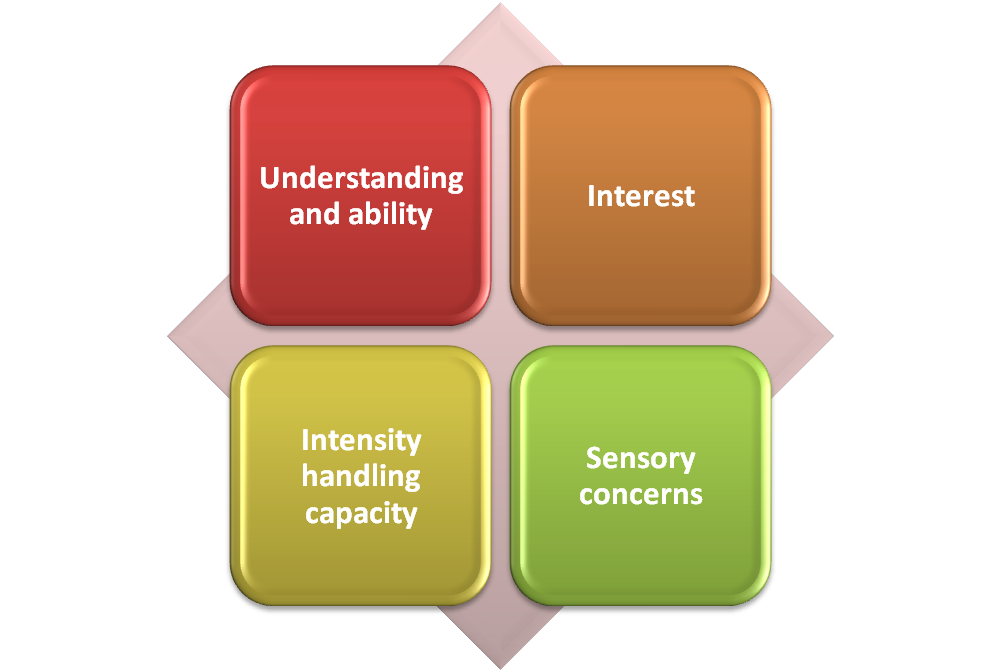
- Understanding & ability: The activity taken up by the child should be based on the child’s understanding, capacity and ability to focus on for a prolonged period of time. For example, a child’s ability to kick a ball does not make him ready to be part of a high-pressure competitive football team. Parents should try to understand these aspects of the child and include the child in decision making before selecting the activity
- Interest: Extra-curricular activities should be something the child actively enjoys.
- Intensity handling Capacity: The activity should be selected based on the intensity a child can handle. A child having concentration issues may not be able to handle debate sessions but can thrive in giving impromptu speeches. Similarly, an athletic child with limited cognitive and social skills may enjoy being in an individual track and field event rather than be in a complex team sport.
- Sensory concerns: Some CWSN are especially sensitive to loud noise, heat, strong smells, and bright lights. In such cases the child should avoid activities that involve sensory assaults. For example a child with light sensitivity may not be able to handle spotlights on a stage. In case the child is keen on these activities, then appropriate equipment that helps the child (like glasses, noise cancelling earmuffs etc) should be provided.
After choice, come partnership.Home-school partnership involves:
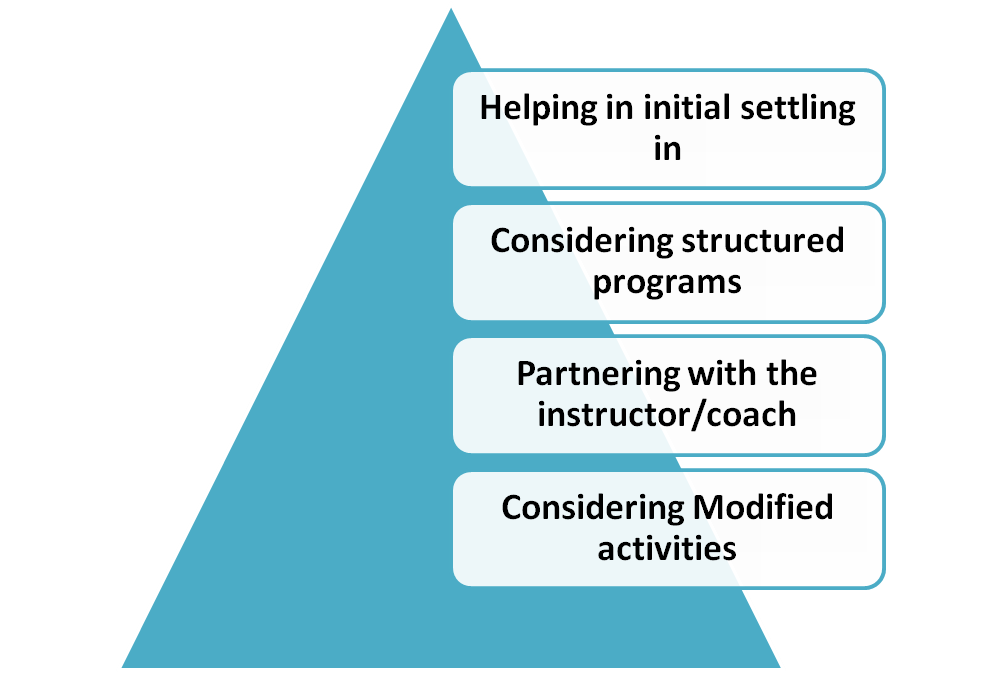
- Helping in initial settling in: In case the child is opting for extra-curricular activities in a new environment, it would help if a parent or an aide is available for initial few days/weeks till the child settles down with the activity, the coach and the environment.
- Considering structured programs: Some neurodivergent children do much better in highly structured programs where rules guide them rather than in open-ended exploration experiences. In some cases, the lack of structure can be more challenging for a child with special needs. Organized programs where child progress at his own pace may be more suitable.
- Partner with the instructor/coach: Parents should make sure that the instructor is aware of the child’s strengths and challenges. They should assist the instructor to provide the accommodations needed for the child or handle the child in case of a meltdown.
- Considering Modified activities: Parents can consider programs that are curated especially for Children with special needs. Parents can check out both the typical and the modified versions of activities and see which fits the child well.
8.5. School’s Commitment:
Infrastructure & Budgeting for Inclusive Sports & Activities
The Accessibility Audit: School heads should ensure that ramps lead not just to classrooms, but to the stage, the playground, and the changing rooms. To ensure that CWSN do not sustain injuries while playing, schools must focus on physical accessibility, sensory-friendly design, and clear safety protocols.
Inclusive Budgeting: The annual school budget should include a “Universal Design” fund. Instead of buying 10 standard footballs, buy 8 standard and 2 “auditory” balls.
Collaboration: If an individual school lacks a playground, they should form a “Cluster Agreement” with local stadiums or community centres to share accessible spaces.
Inclusion Checklist for Leadership

Conclusion: The Power of the Team
The mark of an excellent school is not its average test score, but the diversity of its playground. When we empower schools to be truly inclusive, we are not just helping Children with Special Needs—we are humanizing the entire student body. We are building a future where every child knows that they have a place on the team, a voice in the choir, and a seat at the table.
Video:
| Source and Attribution of images All images used in the above Assets and Aids are originally created. |
| This digital material has been developed by the Sri Sathya Sai Vidya Vahini Inclusive Education Project, a unit of Sri Sathya Sai Central Trust, Prasanthi Nilayam, as a collaborative offering in the service of our nation. |